The Housing Market of the Forest: Woodpeckers, Cavities and Their Tenants
In a healthy forest, one family of birds builds most of the housing. Woodpeckers excavate cavities they will use for a single season, and everything from owls to bats moves in afterwards. Follow the holes and you find the whole community.
The excavator's toolkit
A woodpecker is built around impact: a chisel bill, a reinforced skull, powerful neck muscles, stiff tail feathers that brace against the trunk, and toes arranged to grip bark. The tongue is extraordinary — long, barbed or sticky, and in some species wrapping around the back of the skull when retracted, letting the bird probe deep into insect galleries.
Drumming is speech, not work
The fast, resonant drumroll people hear in spring is not feeding. It is communication, announcing territory and attracting a mate, which is why birds choose the loudest surface available — including gutters and metal signs, to the irritation of homeowners. Actual feeding sounds irregular and quiet by comparison.
The tenants move in
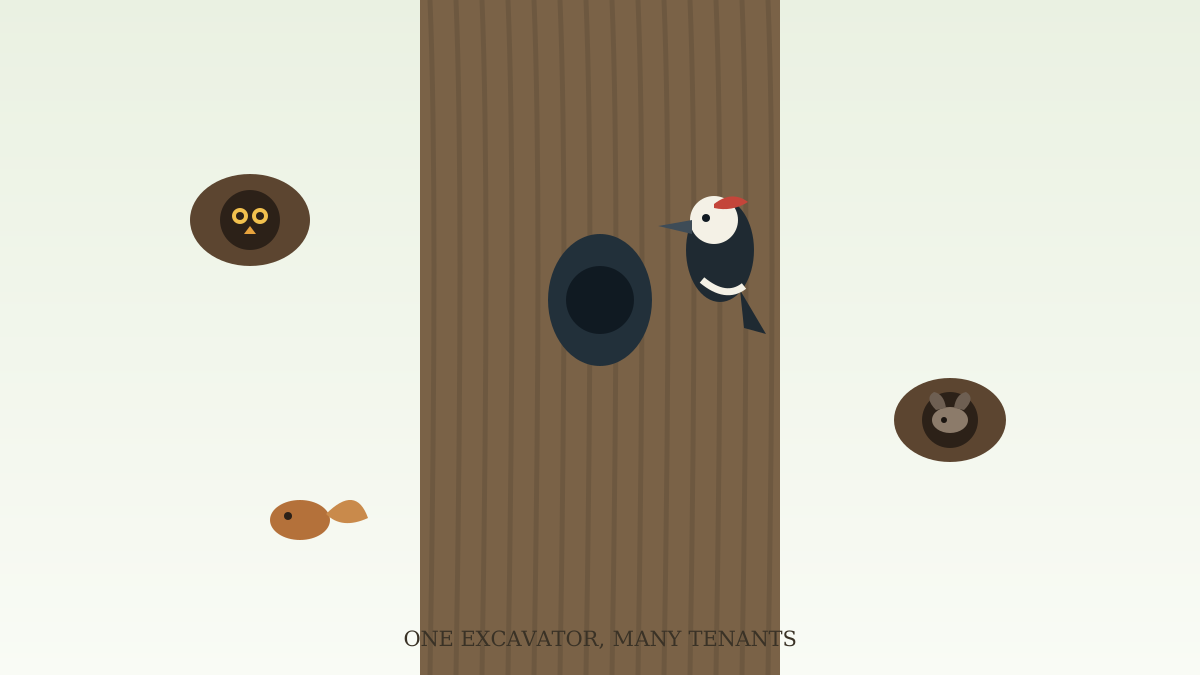
Most woodpeckers excavate a fresh cavity each year, and the old ones become the forest's rental stock. Secondary cavity nesters — tits, flycatchers, starlings, small owls — cannot dig their own and depend entirely on this supply, along with bats, dormice, martens and countless invertebrates. A single old tree can host a succession of tenants for decades.
Why dead and dying trees matter
Cavities are easiest to excavate in wood softened by fungus, so woodpeckers concentrate on dying trunks and standing dead wood. That is why removing every damaged tree quietly removes the forest's nesting infrastructure — and why leaving standing snags is one of the cheapest, most effective things a woodland manager can do.
Conclusion
Listen for drumming and look for holes: you are not just spotting a bird, you are locating the address book of the entire wood.
Frequently Asked Questions
Why do woodpeckers drum on trees?
Drumming is mainly communication — claiming territory and attracting mates. Feeding and excavating produce a different, irregular tapping.
Do other animals use woodpecker holes?
Constantly. Owls, tits, starlings, bats, squirrels, martens and many insects occupy abandoned cavities, which is why woodpeckers are called ecosystem engineers.
How do woodpeckers avoid brain injury?
A combination of a thick, spongy skull structure, strong neck muscles and a very short impact time spreads and absorbs the force of each strike.
Sources & Further Reading
Last updated: 6 August 2026