Beneath the Leaves: The Hidden Life That Keeps a Forest Alive
Walk into any woodland and you will notice the trees. Almost everything actually running the place, however, is out of sight: underground, inside rotting wood, or awake only at night. The forest you can see is the smaller half of the story.
The underground partnership
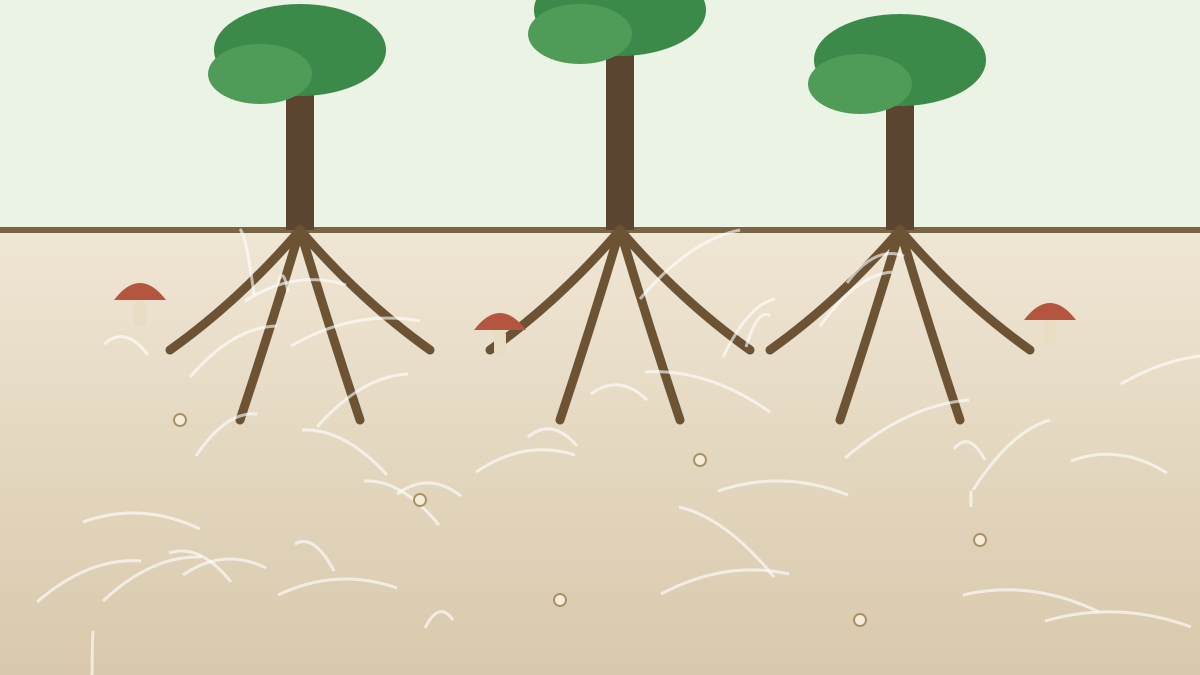
Nearly every forest tree lives in partnership with fungi. Fine fungal threads wrap or enter the roots, forming mycorrhiza: the fungus reaches into soil the roots cannot, delivering water and minerals, and the tree pays with sugars from photosynthesis. It is one of nature's oldest trade agreements, older than forests themselves, and without it most trees would struggle to grow at all.
The wood wide web
Those fungal threads spread far beyond a single tree, linking neighbors into networks through which nutrients and chemical signals can travel — a phenomenon popularly nicknamed the "wood wide web". Scientists still argue about how much is cooperation and how much is fungi managing their own interests, and that honest debate is part of what makes the topic fascinating rather than magical.
The recycling crew
A forest would drown in its own litter without decomposers. Fungi and bacteria break down wood and leaves; earthworms, mites, springtails and beetles shred and mix the debris; and what was a fallen trunk becomes soil that feeds the next generation of trees. This is why foresters now leave dead wood standing and lying: a dead tree can host more species than a living one.
The night shift
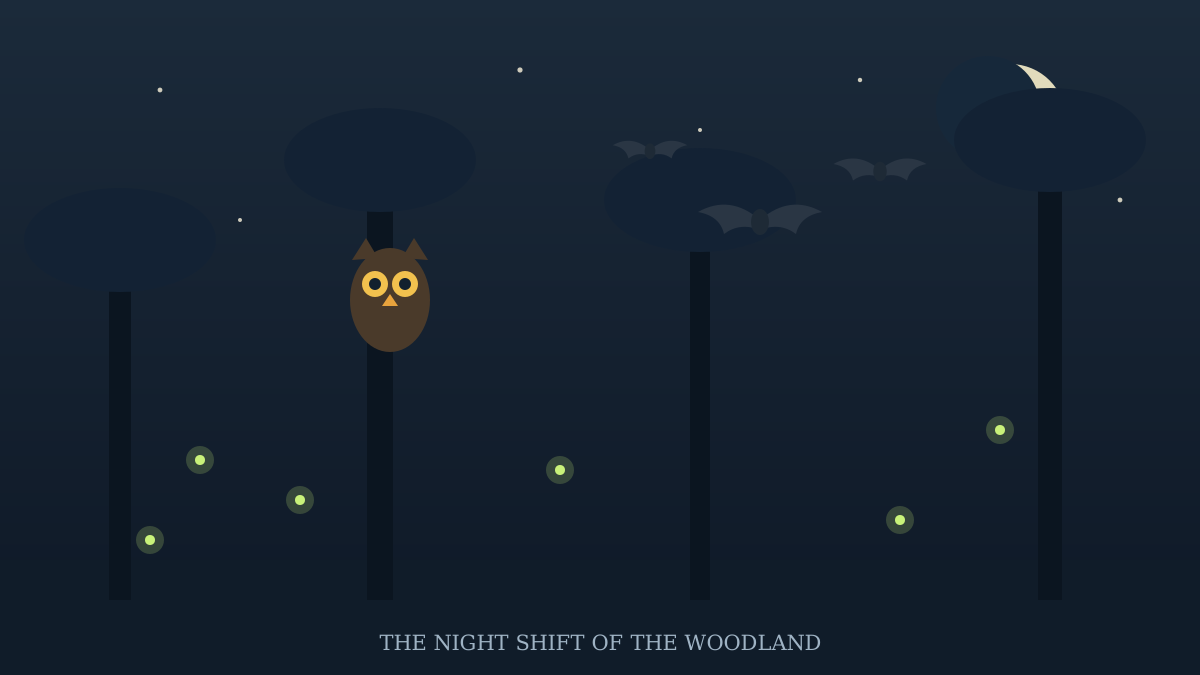
Much of woodland wildlife works after dark. Bats hunt insects using echolocation, owls hunt by asymmetric ears that pinpoint sound, moths pollinate flowers that only open at night, and mammals move along habitual routes. Standing still in a forest at dusk is the cheapest wildlife experience there is — and the noisiest, once your ears adjust.
How to read the hidden forest
You can see the invisible layer with practice: mushrooms marking fungal networks after rain; woodpecker holes and beetle galleries mapping the dead-wood economy; tracks, droppings and gnawed cones revealing the night shift; and the smell of healthy soil — that earthy scent is literally a compound released by soil bacteria. Every one of these is evidence of the forest's real workforce.
Conclusion
A forest is not a collection of trees; it is a partnership between trees, fungi, animals and soil, most of it out of sight. Once you know what is happening beneath the leaves, a quiet wood stops being scenery and becomes one of the busiest places you can stand in.
Frequently Asked Questions
What is mycorrhiza?
A partnership between fungi and tree roots: the fungus gathers water and minerals for the tree, and the tree pays in sugars made by photosynthesis. Most forest trees depend on it.
Do trees really communicate underground?
Trees are linked by fungal networks that can move nutrients and chemical signals between plants. Researchers debate how deliberate this is, but the physical connections are well documented.
Why are dead trees important?
Dead wood is habitat and food: fungi, insects, birds and mammals depend on it. Removing every fallen trunk strips a forest of a large part of its biodiversity.
What lives in forest soil?
An immense community — bacteria, fungi, earthworms, mites, springtails and countless invertebrates. A handful of forest soil can hold more organisms than there are people on Earth.