Reading the Ground: How to Tell Who Walked Through the Woods
Most forest animals see you long before you see them, and then simply avoid you. What they cannot avoid leaving is evidence. Tracking is not mysticism: it is a set of habits for reading ground you were walking over anyway.
Where to look
Prints need soft, fine ground to register. Experienced trackers head straight for track traps: the mud at pond edges, wet sand along streams, dust on quiet paths, snow after a fresh fall. Trail junctions and gaps under fences concentrate movement, which is why one small patch often records more animals than a kilometer of open forest.
What a single print tells you
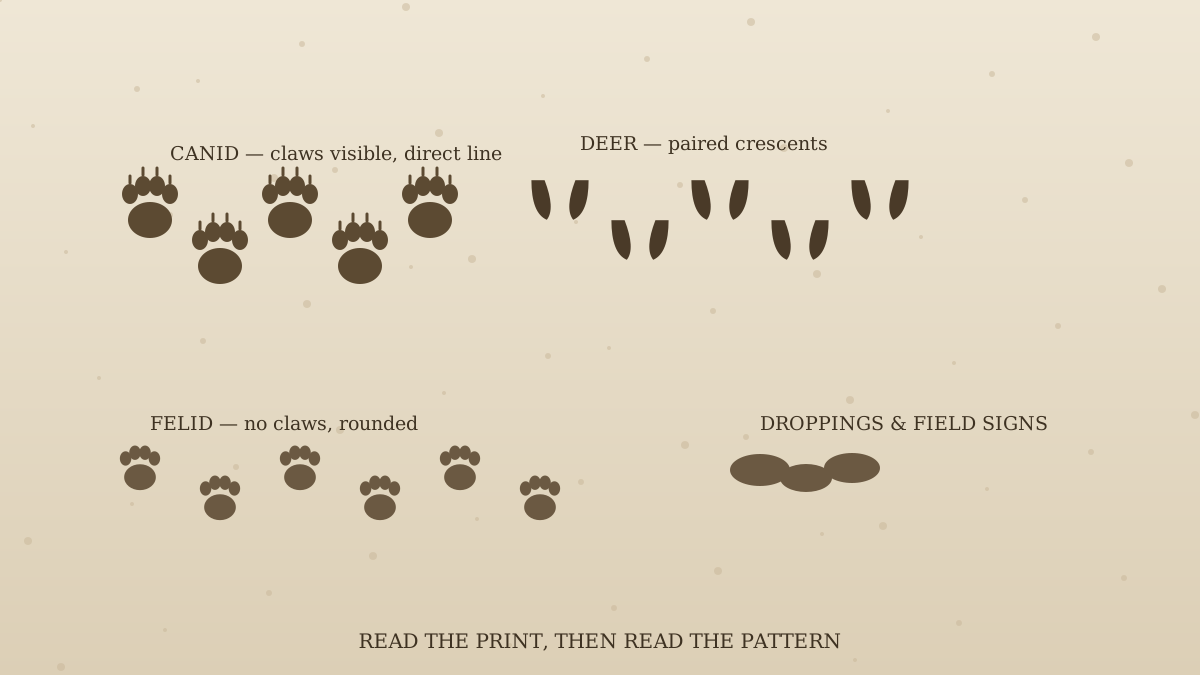
Note size, the number of toes, whether claws show, and the shape of the pad. Cats generally retract their claws, so their prints are clean and rounded; canids usually show claw marks; deer leave the paired crescents of a cloven hoof; rodents and mustelids show small hand-like feet with clearly spread toes.
The pattern matters more than the print
A single print identifies a species; the trail pattern tells you what the animal was doing. Straight, economical lines suggest purposeful travel — typical of wild animals crossing a territory. Wandering, looping trails with frequent stops usually mean feeding, sniffing or a domestic animal with time to spare. Stride length shifts with speed, so a trail records not just who, but how fast and how calm.
Beyond footprints
Field signs are often easier to read than tracks: droppings (shape, size, contents), gnawed cones and nutshells, bark stripped at a consistent height, hair caught on wire, scratch marks on trunks, and flattened forms where a deer lay down. Together they build a picture of a night that happened while you slept.
Conclusion
You do not need to see an animal to know it was there. Learn the traps, the prints and the patterns, and an empty-looking trail turns into a record of everything that used it before you arrived.
Frequently Asked Questions
What is the best ground for finding tracks?
Damp mud, wet sand and fresh snow hold the clearest prints. Track traps such as riverbanks, puddle edges and trail junctions are the places to check first.
How can you tell a dog track from a fox track?
Fox prints are narrower with a more compact, direct line of travel; dog tracks are rounder and wander, usually with human footprints nearby.
What else counts as an animal sign?
Droppings, feeding remains such as gnawed cones and stripped bark, hair on fences, scratch marks, burrows and flattened resting spots.
Sources & Further Reading
Last updated: 6 August 2026